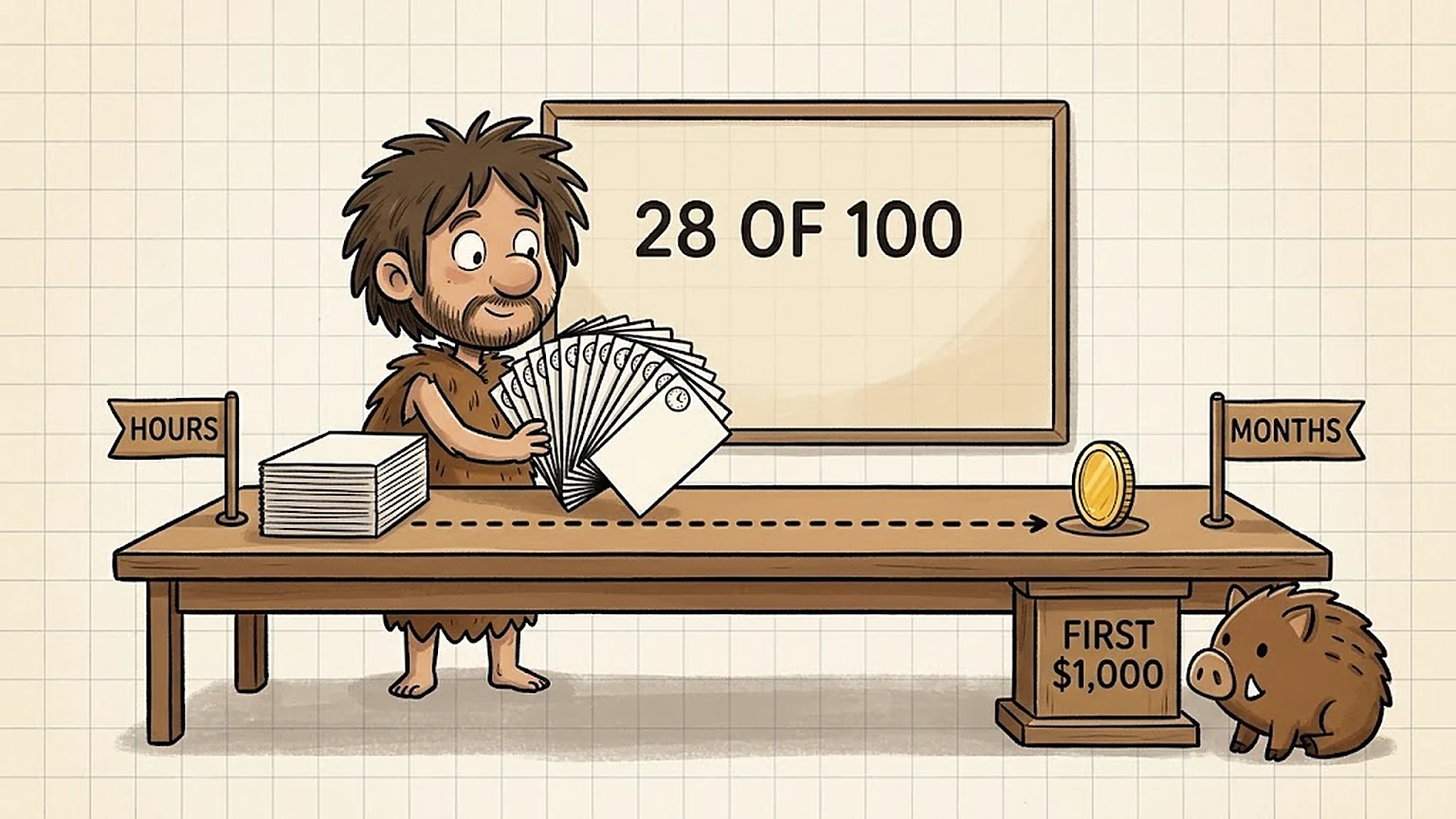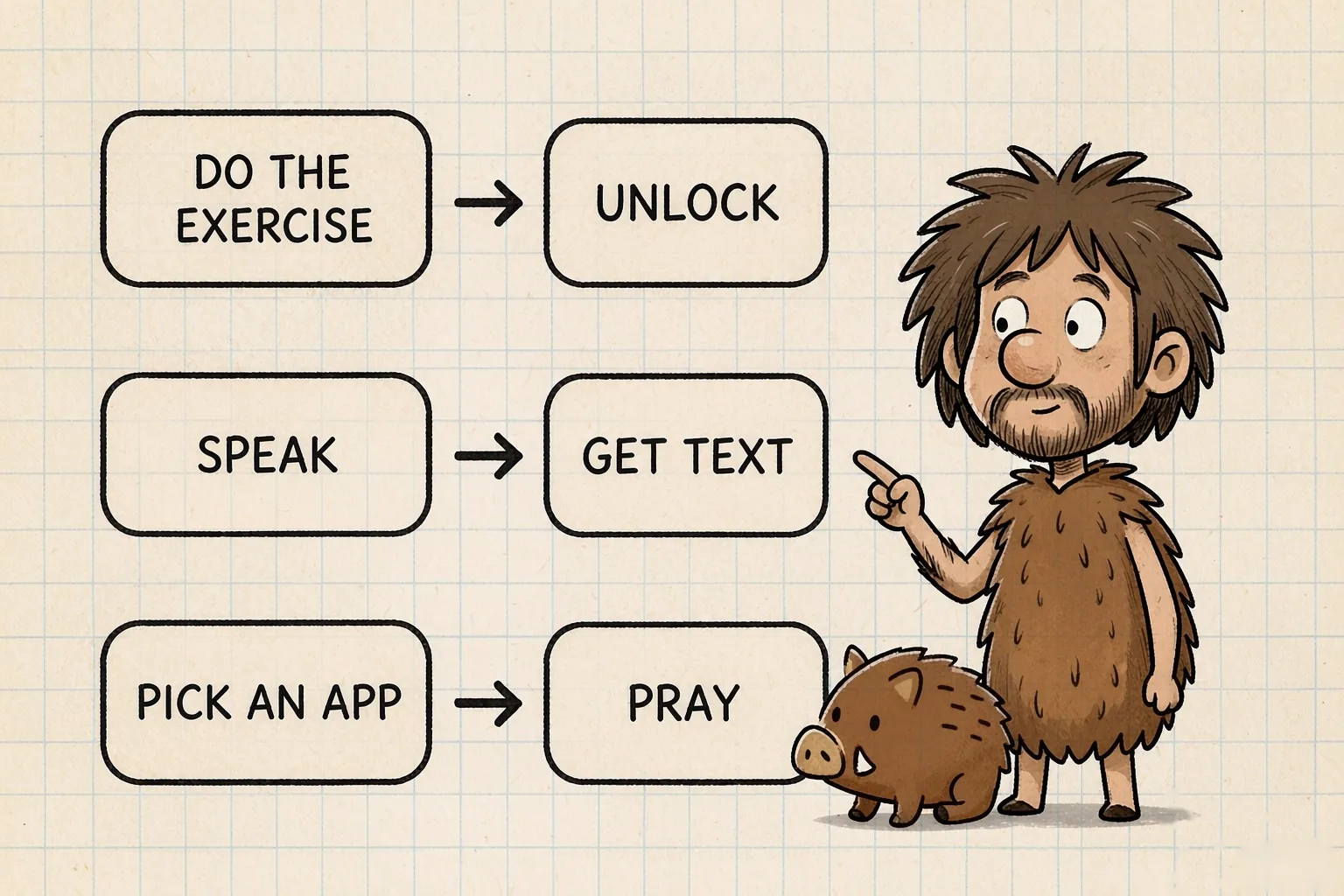
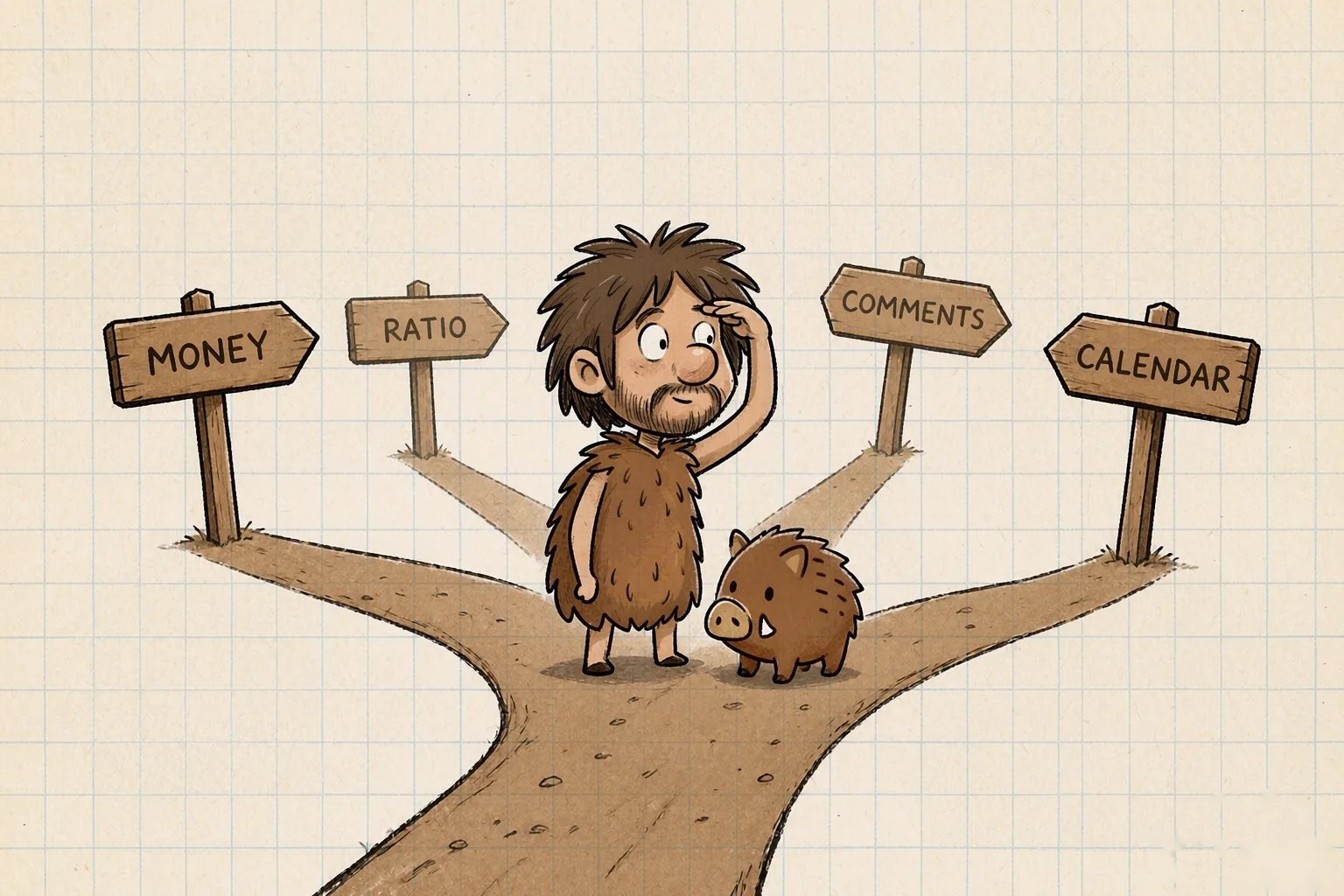
The short version: Fourteen founders described the moment they decided to stop. None of them used a feeling. They used a number: a deposit that never arrived, a trial-to-paid rate that fell to 13 percent, a comment section full of laughs and no questions, a calendar with five years gone. And when they did stop, they made one of four moves: sold it, closed it, changed it, or parked it.
I went through the dataset looking for the decision, not the outcome. Most founder interviews talk about what worked. These fourteen talk about what they killed, and what told them to kill it.
One pattern sits under all of them: the only signal that counts is money. Not interest, not traffic, not kind words. Money.
The only signal that counts is money
Every founder in this dataset who described a stopping decision described it in terms of payment, or the absence of it.
Gil put fifty lifetime licenses on sale before writing code, with a sixty-day no-questions refund. If they sold in a few days, the problem was real. If people only said nice things, it was not.
Setai built a landing page with a fake demo and asked for a $500 refundable deposit. No deposit, no build.
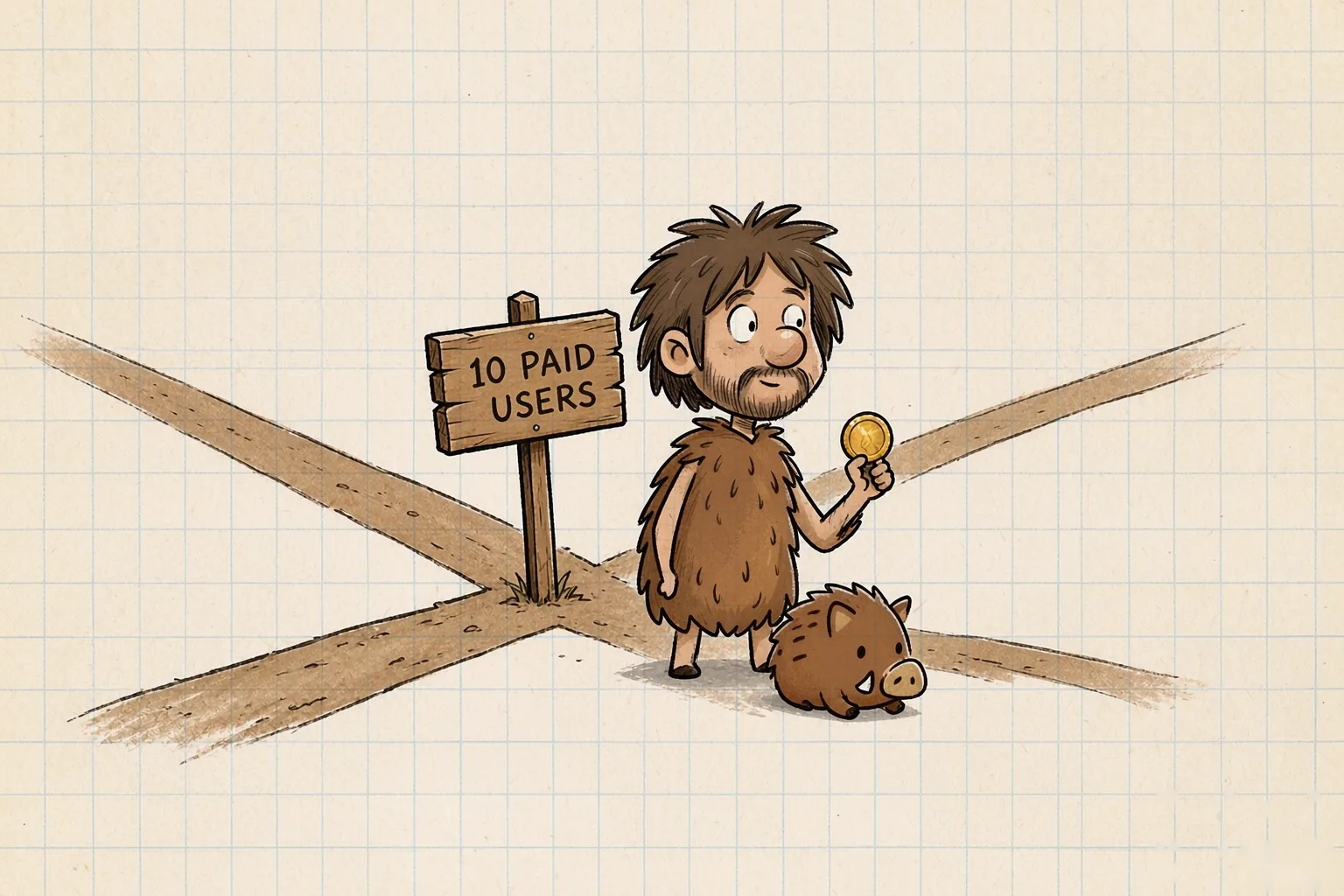
Brian set a commitment metric before starting: ten event organizers had to say yes. Not "that sounds useful." Yes, with a booking.
The same logic appears in reverse on the other side. Din sold lifetime deals for three days and used the buyers' complaints as his roadmap. He said free users just disappear, and paying users tell you what is wrong.
"Free users don't actually validate your product. They will just consume it, and if something doesn't work they will just ghost you."
That is the whole test. Everything below is a specific way of reading the same number.
*Before your next build, put a price on it. If nobody pays, you have your answer earlier than you wanted it.*
Signal 1: nobody will put down a deposit
This is the cheapest test and the one most founders skip.
Gil's version: fifty lifetime licenses, refundable for sixty days. The refund makes it ethical. The deadline makes it a test.
Setai's version: a landing page, a demo video of something that did not exist, and a $500 deposit. The founders only started building after the money arrived, and one of those deposits came from a company big enough to make them take the call seriously.
Brian's version is the strictest. He wrote down the number before he started: ten organizers. If ten did not commit, the project was over. No interpretation, no "maybe with more time."
All three share a property that free beta signups do not: a refundable deposit still costs the buyer something. Attention, a card, a decision. That cost is the signal.
*Pick a number and a date. Write them down before you start. If the number does not arrive, you already know. If you want the mechanics of the deposit test, this piece on selling before you build walks through nine versions.*
Signal 2: trial-to-paid breaks
Once the product exists, the signal moves from "will they pay" to "do they keep paying."
PropGPT is the cleanest case because the founders published both numbers.
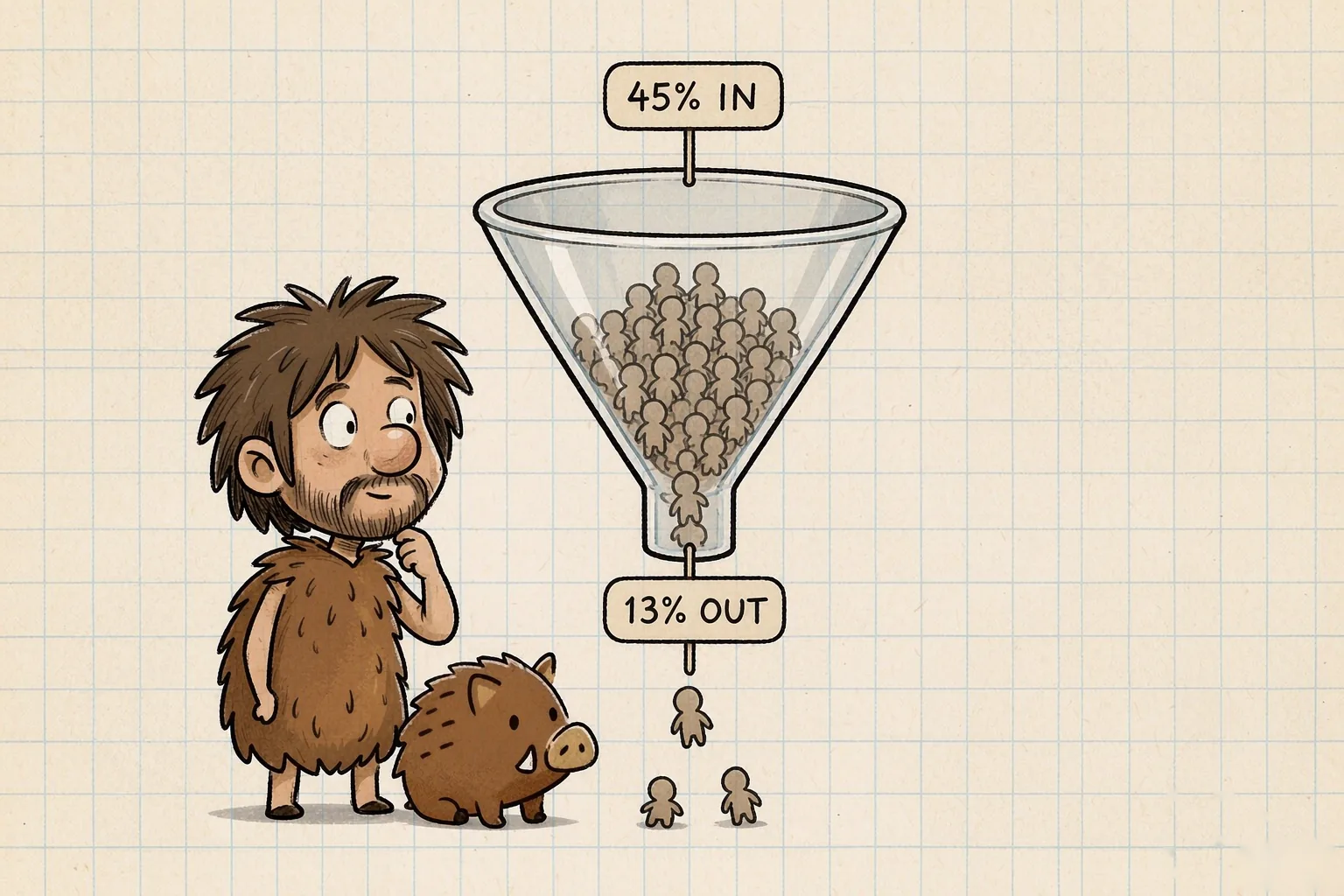
"45% conversion to trial, but then only 13% conversion from trial to paid. What does that mean? Everybody wondered what we were selling, but the product was shit."
Forty-five percent of downloads started a trial. That is a marketing success. Thirteen percent of trials converted. That is a product failure. Revenue sat between $1,000 and $2,000.
They did not add features. They stopped all marketing and spent four months rebuilding, then relaunched to over 50% conversion and a $40K monthly peak.
Sean's version of the same signal was a sales call. With two customers, he kept repositioning the product on live calls and watched two things: how long the call took, and how fast the buyer understood. When calls got shorter and close rates rose, he rebuilt the site around that positioning.
The signal is not "sales are low." It is a specific ratio that does not move no matter what you change on the marketing side. When marketing improves the top of the funnel and the bottom does not move, the product is the problem.
*Write down your trial-to-paid rate. If you cannot move it after two changes to the product, stop adding traffic. This piece on when to start charging covers the other side of the same number.*
Signal 3: the comments are entertained, not convinced
A video can go viral and still tell you to quit.
Ankit's test: hundreds of thousands of views, plenty of laughs in the comments, and nobody asking what the app is or how to download it. That combination means the content worked and the product did not. He killed the direction.
PushScroll is the mirror image, and it is why the test works. They posted a fake demo before the app existed and the comments filled with people asking to buy it.
"There were people literally begging us in the comments to build this app."
Same format, same platform, opposite signal. One comment section says "funny." The other says "take my money."
Din's version is about which users you listen to. Free users give you silence. Lifetime-deal buyers give you complaints, and complaints are information.
*Open your last post. Count the comments that ask how to buy. Zero is a signal.*
Signal 4: the calendar passed the milestone
Feelings are bad at time. Calendars are good at it.
Loic built in a cave for five years before anyone asked about the product. After that, he made a rule: one to two months, a hard date, and a revenue milestone. If the milestone does not arrive, stop or change direction. He also named the trap: attachment to a logo or a name.
Thomas has abandoned more than thirty projects. One of them, a marketplace connecting Gumroad sellers with affiliates, ran for two years and made about $500.
"I think I made something like 500 bucks from it, but I just gave up after 2 years."
Julian's previous project dragged for a full year before he stopped. His rule now: when ad conversion does not work and the team is only showing up out of habit, call it.
The common structure is a date set in advance, not a feeling discovered in retrospect.
*Set the date now. Write the number next to it. When the date arrives, you are not deciding, you are reading.*
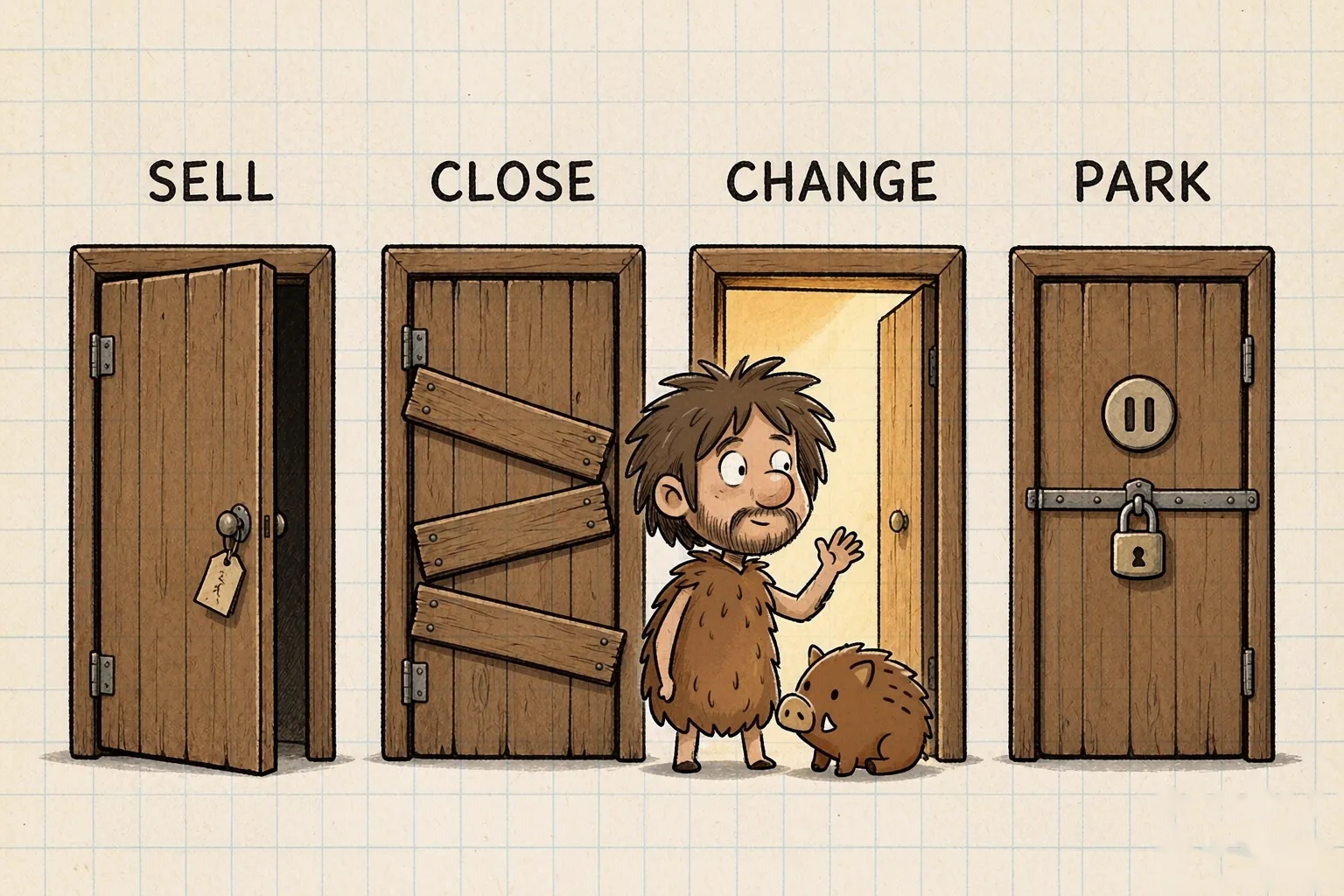
After you quit: sell it, close it, change it, or park it
Most advice stops at "should I quit." The more useful question is what to do in the week after.
The dataset contains four answers.
Sell it. Banu grew Feather to $5,000–6,000 MRR, then built SiteGPT in two weekends. SiteGPT hit $10,000 MRR in its first month, and he could not run both.
"I sold my previous SaaS product, Feather, for $250,000, completely started focusing on SiteGPT and growing it."
Close it. Thomas shut the Gumroad marketplace down after two years and $500. He describes his GitHub as a graveyard of abandoned repositories, without embarrassment. Closing was the cheap option, and he took it late.
Change it. Prrenit's web app had free trials, no conversions, and an API bill he paid himself. He moved to a desktop app with a one-time price and let users bring their own API key.
"Moving away from a web app into a desktop app and making it a one-time purchase... as soon as I changed it, a lot of people actually started paying."
He made $80,000 in the six months after the change.
Park it. Maddox left a game site untouched for two years. It kept earning passive ad revenue with no maintenance. Parking is a real option when the marginal cost is near zero, and it is the one most founders forget.
*Before you decide to quit, decide which of the four you are doing. "Quit" without a verb is how projects rot.*

The cost of waiting
Three numbers from the dataset, all measured in time:
Founder | Time before stopping | What it cost |
|---|---|---|
|
Loic |
5 years |
Built in a cave, nobody asked |
|
Thomas |
2 years on one project |
About $500 |
|
Julian |
1 year on the previous project |
A year of momentum |
None of them describe the delay as a strategy. All three describe it as attachment, or as habit, or as not having a date.
The cost is not only the time. It is the project you did not start.
*Ask what you would build if this one were already dead. If you have an answer, that is your next project, and the delay is the only thing between you and it.*
What to do this week
- Write down one number and one date. A deposit count, a trial-to-paid rate, a revenue figure. Put the date next to it. This turns a feeling into a reading.
- Check which signal you are actually seeing. No deposits, a broken ratio, entertained comments, or a passed date. Each one points to a different fix, and only the last one means stop.
- Decide which of the four moves you would make. Sell, close, change, or park. Naming it in advance makes the decision cheaper when the date arrives.
FAQ
How do I know it is time to quit?
In this dataset, the signal was always a number: no deposits after a set date, a trial-to-paid rate that would not move, comments that never asked how to buy, or a milestone date that passed. Feelings were not part of the decision.
Should I quit or pivot?
The dataset shows four endings, not two: sell it, close it, change it, or park it. "Pivot" is one of them, and it worked for Prrenit because the product changed shape, not just the message.
How long should I give a side project?
Loic's rule is the clearest: one to two months with a hard date and a revenue milestone. The founders who waited longest describe the wait as attachment, not as patience.
What if I have already spent years on it?
Sunk cost is the trap Loic named. The question is not what you have spent, it is whether the next month produces a different number. If not, the years are the reason to stop, not the reason to continue.
Does this apply to a project that already makes money?
Yes. Banu sold a product at $5,000–6,000 MRR because it was taking time from one growing faster. Quitting is not only for failures.
---
If you have not started yet, the free SaaS idea validation checklist is the place to start.
*The interviews in this piece come from public founder interviews. Figures are the founders' own, as stated in their interviews. This is a sample of founders who were interviewed because they built something, not a random sample of all products.*